Mark Price
Theatre and Heritage Consultant

  • Home
  • About
  • Case Studies
  • Contact
03330 118883
  • Heritage Advice
  • Heritage Statements
  • Heritage Planning
  • Heritage Recording Reports
  • Heritage Significance
  • 
  • 

Playhouse Theatre Heritage Statement

January 3, 2022 by Mark Price

Playhouse Theatre, Northumberland Avenue

Mark Price was asked to provide a Heritage Statement for Playhouse Theatre, Northumberland Avenue, London.  

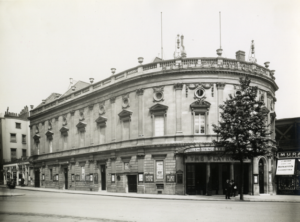
The Playhouse Theatre opened as the Royal Avenue Theatre in 1882.  It is a Grade II Listed Building, within the Covent Garden Conservation Area in the City of Westminster.

The theatre was originally designed by F. H. Fowler.  Francis Fowler was a British commercial architect who designed the Metropole Hotel (now the Corinthia Hotel) with James Ebenezer Saunders in 1885.  The auditorium was horseshoe form with two balconies curving along the side walls to meet flanking boxes. 
Contact us if you would like a Heritage Statement.

In 1905, Cyril Maude took over management of the building.  He set about plans for the reconstruction of the theatre.  The works were almost completed when, in 1905, part of Charing Cross Station collapsed onto the theatre.  Maude begun rebuilding the theatre, but this time to the designs of Messers Detmar Blow and Fernand Billerey. 

The original façade was retained, but inside a completely new interior was constructed within the walls of the old theatre.  The interiors were designed in the Franco-Venetian style, with two large paintings represented the origin of modern comedy and Florentine lamp standards.  The rebuilding incorporated a complex set of timber understage machinery.

Today the theatre is owned by American theatrical producers, Ted and Norman Tulchin’s Maidstone Productions with the venue being managed by the Ambassador Theatre Group.

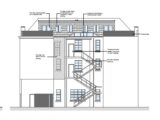
A Heritage Statement was required to support a major refurbishment scheme which aimed to convert the building for a venue for cabaret.  

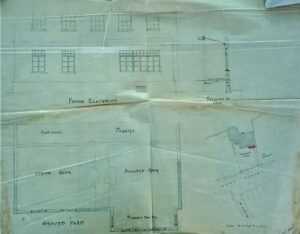
Mark Price was able to provide a comprehensive Statement of Significance not only supporting the application, but justifying new interventions within the auditorium, making the theatre fit-for-purpose.  He was also able to source original plans and photographs to assist with the restoration and develop an understanding of the original design and finishes.
Filed Under: Case Studies, News Tagged With: heritage statement, Theatre

Heritage Statement for Mansion House

December 1, 2021 by Mark Price

Listed building consent for new services


Mark Price was asked to help with a Heritage Statement for listed mansion house in Long Street, Devizes, Wiltshire.  The private house had been recently purchased.  An application for Listed Building Consent was urgently required by its new owners in order to upgrade its services. 

The Georgian house was listed Grade II in 1954 and formed part of a number of houses also considered to be of group value.  It is in the Devizes Conservation Area.  An assessment which took into account national guidance and a statement of significance was provided.

The existing boiler had reached the end of its economic life expectancy.  Two new boilers were required to heat and provide hot water to a house of this size.  It also required two external flues.  The boiler engineer advised that the best practical location for the new boilers would be in the basement and new routes were needed for the pipes to feed the radiators. 

Mark was able to substantiate the proposals, choosing accessible service routes and locations to easily allow future maintenance, repair and eventual replacement.  New pipework will discretely routed through voids under the suspended timber floors. 

Mark was also able to substantiate the position of the two external flues in order to justify that they would not harm significant features of interest.  The statement addressed proposals for internal works planned by the current owners. 

Mark was able to corroborate the proposals, maintaining that there was limited harm caused by the alterations planned.  He was also able to provide a Heritage Statement adhering to national and local guidance.   

Filed Under: Case Studies, News Tagged With: heritage statement

New build in curtilage of listed building

June 1, 2021 by Mark Price

2 Mill Lane, Keighley West, Yorkshire

2 Mill Lane

Supporting new design requires careful consideration. Justifying gap-fill development in the curtilage of a listed building or a sensitive location requires skill.

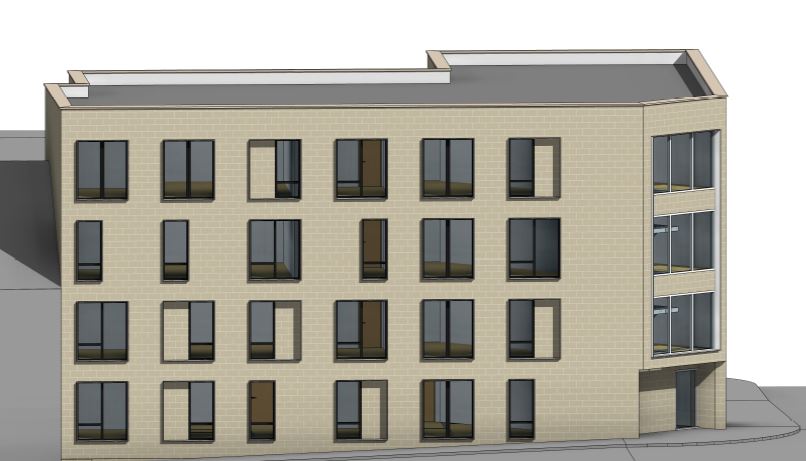
Mark was asked to support a proposal for a residential block with 24 apartments and commercial units on a site opposite the Grade II listed Keighley Railway Station.

P4B Architecture designed a contemporary scheme that required a Heritage Statement to ensure the proposals preserved the listed station setting. Mark was able to substantiate the proposal; he maintained that there was no harm caused by the new build.

The listed station was probably designed by Charles Trubshaw FRIBA in 1883. Trubshaw was a railway building architect for the Midland Railway.  A high level station, built over the tracks, in the Free Renaissance style was constructed in coursed, dressed millstone grit sandstone.

Low Mill Lane – so called because it was the first cotton mill built in Yorkshire – was purposely close to the River Worth. Only a later wing survives.

A row of shops occupied the site of 2 Low Mill Lane in the nineteenth Century. Mark illustrated advantages to the scheme in the Heritage Statement. These included reinforcing a missing street corner and the regeneration of the area. Mark sourced original photographs to help understand the surrounding heritage assets. He demonstrated that the proposal would preserve the setting, provide a visible connection to the town centre, as well as providing wider public benefits.

Filed Under: Case Studies, News Tagged With: heritage statement

Ken Hill House

October 13, 2018 by Mark Price

The Victorian Society recently visited Ken Hill in Snettisham.  The property is an early example of a neo Queen Anne style and Grade II listed.  Ken Hill was built as a retreat in 1878-80 by John James Stevenson (1831–1908) for Yorkshire industrialist Sir Edward Green (1831-1923) the inventor of ‘Green’s Economiser’.  It is the type of building that might need a Heritage Statement.

The reception rooms are on the piano nobile and arranged to correspond with the recommendations contained in Stevenson’s House Architecture (1880) with the mediaeval sequence of kitchen/screens, hall and solar. It is the first major provincial example of the ‘Queen Anne’ or ‘Domestic Revival’ style.

Externally the front elevation is a well-conceived three bay design with a projecting gabled bay and dominated by four arched headed sash windows with thick glazing bars.  An external staircase with stone balusters leads to the main entrance which has an elaborate piano nobile doorcase with fluted columns and keystone.  The roof is steeply pitched with four sashed and glazing barred dormers with broken pediment gables with central roundels.

In 1871 Stevenson and Edward Robert Robson (1836 – 1917) became partners, Robson having been appointed architect to the London School Board.  Soon they became pioneers of the Queen Anne domestic revival, which provided a flexible and inexpensive idiom for Robson’s new schools.

The image shows the top of the main staircase, chosen to show the relationship of the corridor and supporting roof struts as witnessed in many of Stevenson and Robson’s Board Schools.

Contact Theatre and Heritage if you would like a Heritage Statement.

Filed Under: News Tagged With: heritage statement

« Previous Page

We were delighted with Mark Price’s professional help with a complicated Tudor building. The application proceeded without a hitch.

— S Putnam

About

Theatre and Heritage is an independent consultancy led by Mark Price, an experienced built heritage specialist working across London and the UK.

The practice specialises in the preparation of Rapid Heritage Statements, with straightforward reports often delivered within just 5 days—helping you keep your project moving without delay.

The consultancy advises on all types of heritage assets, including listed buildings, historic structures and conservation area proposals. Whether you are planning alterations, extensions, restoration or new development, Theatre and Heritage provides clear, practical advice to help you achieve successful outcomes in sensitive historic contexts.

Mark has a strong track record in both local authority and private practice, offering valuable insight into how decisions are made and how to secure approvals efficiently.

Recognised as a leading expert in theatre and cinema architecture, the consultancy also specialises in advising on theatres and cultural buildings, helping venues navigate heritage constraints and ensuring they are adapted to remain fit for purpose.

Get in touch to discuss how Theatre and Heritage can support your project.

Gallery

Image
image
Belvoir Castle
Image
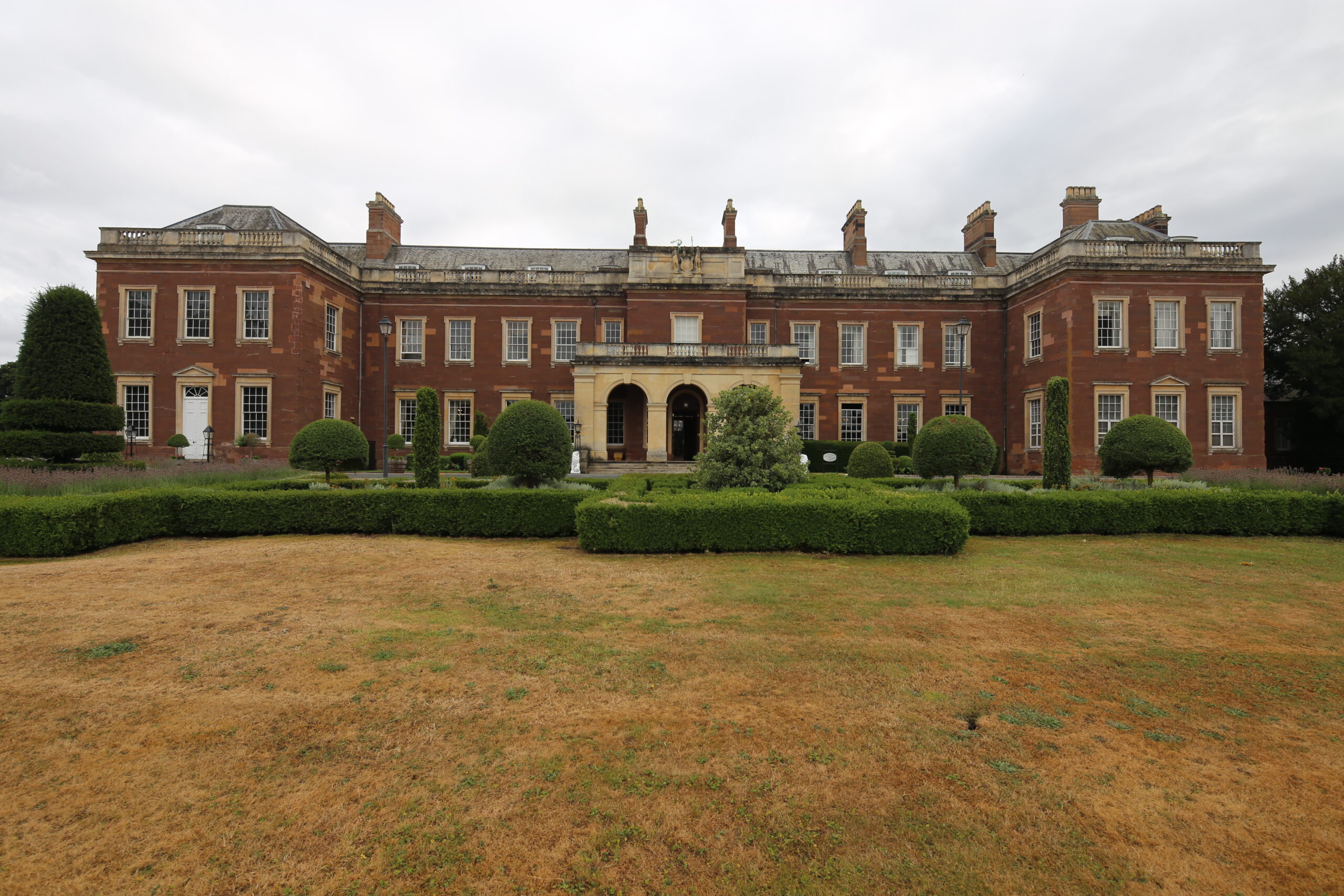
Holme Lacy

News

Savoy Theatre – Heritage Statement

July 13, 2026

Locally Listed Building – Heritage Statement

May 5, 2026

© 2026 Mark Price Theatre and Heritage
  • Accessibility
  • Legal
  • Privacy
  • Sitemap
hosted by Tortilla Hosting