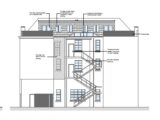
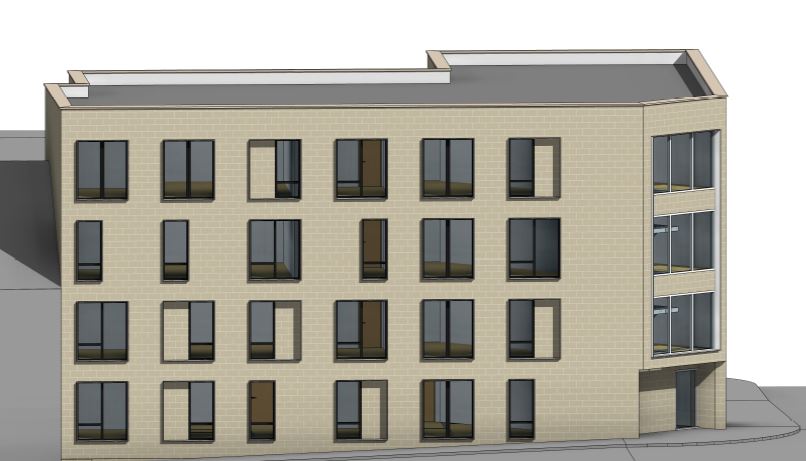
2 Mill Lane, Keighley West, Yorkshire
Supporting new design requires careful consideration. Justifying gap-fill development in the curtilage of a listed building or a sensitive location requires skill.
Mark was asked to support a proposal for a residential block with 24 apartments and commercial units on a site opposite the Grade II listed Keighley Railway Station.
P4B Architecture designed a contemporary scheme that required a Heritage Statement to ensure the proposals preserved the listed station setting. Mark was able to substantiate the proposal; he maintained that there was no harm caused by the new build.
The listed station was probably designed by Charles Trubshaw FRIBA in 1883. Trubshaw was a railway building architect for the Midland Railway. A high level station, built over the tracks, in the Free Renaissance style was constructed in coursed, dressed millstone grit sandstone.
Low Mill Lane – so called because it was the first cotton mill built in Yorkshire – was purposely close to the River Worth. Only a later wing survives.
A row of shops occupied the site of 2 Low Mill Lane in the nineteenth Century. Mark illustrated advantages to the scheme in the Heritage Statement. These included reinforcing a missing street corner and the regeneration of the area. Mark sourced original photographs to help understand the surrounding heritage assets. He demonstrated that the proposal would preserve the setting, provide a visible connection to the town centre, as well as providing wider public benefits.