O n a visit with the Frank Matcham Society to Catania, Italy, I stumbled across Diana, a former cine- variety house, marvellously, sensitively and creatively converted into a clothing store. In the heart of a retail street, it is a really good illustration of what can be done with this building type when not currently required for cultural use. It preserves the significant elements of the cinema whist giving it a new use.
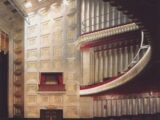
The Diana cinema was designed by Paolo Lanzerotti (1875-1944) and commissioned by Baron Filippo Pancari. It opened to the public on 24 December 1925 with the film ‘Maternità’. It is a typical music hall format: oblong shaped flat-floored hall with central lantern light. Proscenium and stage at one end and horseshoe balconies to either side and opposite. It would be an interesting building to research and prepare a Heritage Statement to support new uses.
Constructed in 1925, it could be argued that the style and architecture was somewhat dated, however, interestingly, the building design was innovative. These included an ‘electric opening stage’ that could be extended inside the room and by the fact that it was one of the first multiplexes in Catania and among the first in Italy. The main hall hosted variety acts together with the projection of the film. In the basement was the Saletta, which only showed film.
The shop conversion was undertaken by Commapartners in 2017. The original foyer (small by 1925 standards) and its elaborate marble and cast iron staircases remain as access to the former balconies now providing space for clothes rails. A fully glazed lift has been carefully positioned to access the balconies from the shop floor so that the stage and proscenium arch remain the focus of the hall. I would concur with the architect’s description of the conversion as a ‘functional design which allows the reopening and the new usability of a site of great historical and architectural value, returned to the city of Catania, to become a pole of attraction for the new generations’.
The limited interventions to the building are commendable. The proscenium arch remains in its original gilt paintwork as does the Diana cartouche above. Theatrical red house tabs have also been kept and the upper gallery and seats simply closed off to the public. This is a building ‘in waiting’ for a cultural use but otherwise happy in its new purpose.